
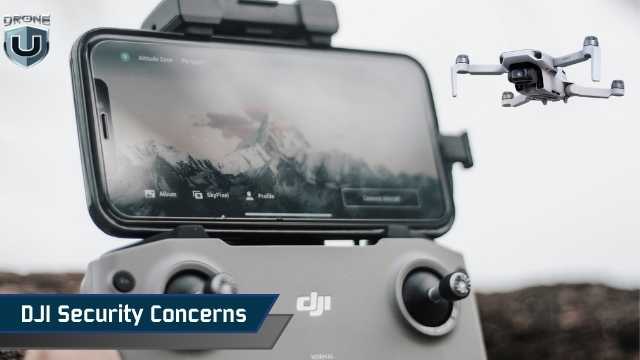
 Have you ever wondered what exactly happens to your data the moment your DJI drone takes flight? With the ongoing debates surrounding DJI security concerns, distinguishing genuine risks from mere speculation can be challenging. Let's set aside sensational headlines and focus on the technical reality of how data moves between your drone, the remote controller, and your flight application.
Most apprehensions regarding DJI security stem from a lack of clarity. The idea that DJI platforms pose an unavoidable, fixed security threat is largely a misconception. In reality, security vulnerabilities fluctuate based on how you configure your system, manage your networks, and conduct your operations. A setup that is perfectly safe for one mission could present significant risks in another simply due to user habits.
Once you comprehend the actual data flow of a DJI system, mitigating security risks becomes a highly manageable process.
## Decoding DJI "Security Issues"
When discussions about DJI vulnerabilities arise, the drone hardware is rarely the sole culprit. The conversation usually lumps together three distinct categories of risk, which leads to widespread confusion.
### 1. Data Security
This revolves around the actual data generated during a flight—photos, videos, flight logs, and telemetry. The core concern is where this data is stored and whether it inadvertently leaves your localized control.
### 2. Operational Security
This boils down to pilot habits. The hardware you use, the networks you connect to, and how you transfer files post-flight play a massive role. Two pilots flying the exact same drone model can experience vastly different security risks based entirely on their operational protocols.
### 3. Policy and Public Perception
Sometimes, the risk isn't technical at all; it's about trust. Government agencies, clients, and regulators may harbor negative perceptions regarding DJI platforms regardless of the technical safeguards you implement. This perception can lead to operational restrictions or contract limitations.
## The Reality of DJI Data Flow
To effectively minimize risk, you must understand how DJI data actually travels.
By default, the telemetry, sensor data, and media captured by the aircraft do not automatically upload to the internet. First, it travels through an encrypted local link directly to your remote controller. From there, it resides on the controller or the mobile device running the flight app.
What happens next is entirely up to you. If your connected device has active internet access and cloud synchronization enabled, your data may be pushed externally. However, if you disable these features and fly offline, your data remains strictly local. DJI systems do not force background uploads during standard flight operations.
## Documented Risks: Fact vs. Fiction
While DJI security concerns shouldn't be ignored, not all hold the same level of severity.
Over the years, independent cybersecurity researchers have pointed out legitimate vulnerabilities in older firmware versions, insecure update pathways, and overly permissive mobile apps. On the flip side, DJI has proactively addressed many of these issues, notably by introducing "Local Data Mode" and enhanced network isolation for their enterprise platforms.
The prevailing risk today doesn't stem from "secret data theft," but rather from unmanaged systems, outdated software, and poor configuration.
## Core Security Risks You Must Mitigate
Virtually every legitimate DJI security concern falls into one of these four operational buckets:
### 1. Unintentional Data Leakage
Your drone captures highly valuable commercial and operational data. Security breaches typically occur when this data is moved unintentionally—usually through automatic cloud syncing, logging into unverified accounts, or careless handling of SD cards post-flight.
### 2. Unrestricted Network Access
The moment your controller connects to a Wi-Fi or cellular network, your risk profile increases. Background application services and automatic updates create pathways for data to move. Controlling network access is your primary line of defense.
### 3. Unverified Software
Rushed firmware updates, vulnerable mobile applications, or unnecessary third-party plugins can introduce blind spots. System security weakens when you fail to validate the software you are installing.
### 4. Human Error
This is arguably the highest risk factor. Utilizing personal smartphones for sensitive commercial flights, sharing login credentials, and lacking strict data hygiene protocols cause more data breaches than technical hardware flaws.
## Actionable Steps to Secure Your DJI Operations
Mitigating risk isn't about overcomplicating your workflow; it’s about taking deliberate, controlling actions.
### 1. Isolate Your Data
Make it a habit to enable Local Data Mode or Network Security Mode before you ever spin up the propellers. These built-in settings sever connections to cloud services, keeping your flight data contained on your device. Whenever possible, fly completely offline.
### 2. Lock Down Your Network
Treat your remote controller as a secure perimeter. Only connect to the internet when a mission strictly requires it. Use dedicated work devices rather than personal smartphones, and ensure no background apps are running that could compromise your network.
### 3. Strictly Manage Updates
Never update firmware blindly. Test new software versions in a controlled, non-sensitive environment before rolling them out to your entire drone fleet. Avoid unnecessary third-party applications.
### 4. Standardize Pilot Protocols
Establish rigid operating procedures for your team. Prohibit the use of personal devices on job sites, assign individualized accounts, and set strict rules for handling SD cards and cloud storage after the flight concludes.
## Handling High-Risk Missions
If you are flying for critical infrastructure, government entities, or high-security commercial clients, standard mitigation may not be enough.
In these scenarios, utilize dedicated, air-gapped controllers that never touch a public or personal network. Store all sensitive media and flight logs on secure, on-premise servers. Most importantly, meticulously document every security control you have implemented so you can easily prove your compliance during an audit.
## The Final Verdict
DJI drones are highly capable tools; they do not inherently generate security risks on their own. The vulnerabilities arise from the choices made before, during, and after a mission. By restricting network access, managing your software ecosystems, and enforcing strict pilot discipline, DJI security concerns become entirely manageable.
***
Elevate your aerial operations with secure, top-tier drone technology and professional accessories. Upgrade your fleet today at [https://globaldroner.com/](https://globaldroner.com/).
Have you ever wondered what exactly happens to your data the moment your DJI drone takes flight? With the ongoing debates surrounding DJI security concerns, distinguishing genuine risks from mere speculation can be challenging. Let's set aside sensational headlines and focus on the technical reality of how data moves between your drone, the remote controller, and your flight application.
Most apprehensions regarding DJI security stem from a lack of clarity. The idea that DJI platforms pose an unavoidable, fixed security threat is largely a misconception. In reality, security vulnerabilities fluctuate based on how you configure your system, manage your networks, and conduct your operations. A setup that is perfectly safe for one mission could present significant risks in another simply due to user habits.
Once you comprehend the actual data flow of a DJI system, mitigating security risks becomes a highly manageable process.
## Decoding DJI "Security Issues"
When discussions about DJI vulnerabilities arise, the drone hardware is rarely the sole culprit. The conversation usually lumps together three distinct categories of risk, which leads to widespread confusion.
### 1. Data Security
This revolves around the actual data generated during a flight—photos, videos, flight logs, and telemetry. The core concern is where this data is stored and whether it inadvertently leaves your localized control.
### 2. Operational Security
This boils down to pilot habits. The hardware you use, the networks you connect to, and how you transfer files post-flight play a massive role. Two pilots flying the exact same drone model can experience vastly different security risks based entirely on their operational protocols.
### 3. Policy and Public Perception
Sometimes, the risk isn't technical at all; it's about trust. Government agencies, clients, and regulators may harbor negative perceptions regarding DJI platforms regardless of the technical safeguards you implement. This perception can lead to operational restrictions or contract limitations.
## The Reality of DJI Data Flow
To effectively minimize risk, you must understand how DJI data actually travels.
By default, the telemetry, sensor data, and media captured by the aircraft do not automatically upload to the internet. First, it travels through an encrypted local link directly to your remote controller. From there, it resides on the controller or the mobile device running the flight app.
What happens next is entirely up to you. If your connected device has active internet access and cloud synchronization enabled, your data may be pushed externally. However, if you disable these features and fly offline, your data remains strictly local. DJI systems do not force background uploads during standard flight operations.
## Documented Risks: Fact vs. Fiction
While DJI security concerns shouldn't be ignored, not all hold the same level of severity.
Over the years, independent cybersecurity researchers have pointed out legitimate vulnerabilities in older firmware versions, insecure update pathways, and overly permissive mobile apps. On the flip side, DJI has proactively addressed many of these issues, notably by introducing "Local Data Mode" and enhanced network isolation for their enterprise platforms.
The prevailing risk today doesn't stem from "secret data theft," but rather from unmanaged systems, outdated software, and poor configuration.
## Core Security Risks You Must Mitigate
Virtually every legitimate DJI security concern falls into one of these four operational buckets:
### 1. Unintentional Data Leakage
Your drone captures highly valuable commercial and operational data. Security breaches typically occur when this data is moved unintentionally—usually through automatic cloud syncing, logging into unverified accounts, or careless handling of SD cards post-flight.
### 2. Unrestricted Network Access
The moment your controller connects to a Wi-Fi or cellular network, your risk profile increases. Background application services and automatic updates create pathways for data to move. Controlling network access is your primary line of defense.
### 3. Unverified Software
Rushed firmware updates, vulnerable mobile applications, or unnecessary third-party plugins can introduce blind spots. System security weakens when you fail to validate the software you are installing.
### 4. Human Error
This is arguably the highest risk factor. Utilizing personal smartphones for sensitive commercial flights, sharing login credentials, and lacking strict data hygiene protocols cause more data breaches than technical hardware flaws.
## Actionable Steps to Secure Your DJI Operations
Mitigating risk isn't about overcomplicating your workflow; it’s about taking deliberate, controlling actions.
### 1. Isolate Your Data
Make it a habit to enable Local Data Mode or Network Security Mode before you ever spin up the propellers. These built-in settings sever connections to cloud services, keeping your flight data contained on your device. Whenever possible, fly completely offline.
### 2. Lock Down Your Network
Treat your remote controller as a secure perimeter. Only connect to the internet when a mission strictly requires it. Use dedicated work devices rather than personal smartphones, and ensure no background apps are running that could compromise your network.
### 3. Strictly Manage Updates
Never update firmware blindly. Test new software versions in a controlled, non-sensitive environment before rolling them out to your entire drone fleet. Avoid unnecessary third-party applications.
### 4. Standardize Pilot Protocols
Establish rigid operating procedures for your team. Prohibit the use of personal devices on job sites, assign individualized accounts, and set strict rules for handling SD cards and cloud storage after the flight concludes.
## Handling High-Risk Missions
If you are flying for critical infrastructure, government entities, or high-security commercial clients, standard mitigation may not be enough.
In these scenarios, utilize dedicated, air-gapped controllers that never touch a public or personal network. Store all sensitive media and flight logs on secure, on-premise servers. Most importantly, meticulously document every security control you have implemented so you can easily prove your compliance during an audit.
## The Final Verdict
DJI drones are highly capable tools; they do not inherently generate security risks on their own. The vulnerabilities arise from the choices made before, during, and after a mission. By restricting network access, managing your software ecosystems, and enforcing strict pilot discipline, DJI security concerns become entirely manageable.
***
Elevate your aerial operations with secure, top-tier drone technology and professional accessories. Upgrade your fleet today at [https://globaldroner.com/](https://globaldroner.com/).
How To Mitigate All DJI Security Issues
Have you ever wondered what exactly happens to your data the moment your DJI drone takes flight? With the ongoing debates surrounding DJI security concerns, distinguishing genuine risks from mere speculation can be challenging. Let's set aside sensational headlines and focus on the technical reality of how data moves between your drone, the remote controller, and your flight application.
Most apprehensions regarding DJI security stem from a lack of clarity. The idea that DJI platforms pose an unavoidable, fixed security threat is largely a misconception. In reality, security vulnerabilities fluctuate based on how you configure your system, manage your networks, and conduct your operations. A setup that is perfectly safe for one mission could present significant risks in another simply due to user habits.
Once you comprehend the actual data flow of a DJI system, mitigating security risks becomes a highly manageable process.
## Decoding DJI "Security Issues"
When discussions about DJI vulnerabilities arise, the drone hardware is rarely the sole culprit. The conversation usually lumps together three distinct categories of risk, which leads to widespread confusion.
### 1. Data Security
This revolves around the actual data generated during a flight—photos, videos, flight logs, and telemetry. The core concern is where this data is stored and whether it inadvertently leaves your localized control.
### 2. Operational Security
This boils down to pilot habits. The hardware you use, the networks you connect to, and how you transfer files post-flight play a massive role. Two pilots flying the exact same drone model can experience vastly different security risks based entirely on their operational protocols.
### 3. Policy and Public Perception
Sometimes, the risk isn't technical at all; it's about trust. Government agencies, clients, and regulators may harbor negative perceptions regarding DJI platforms regardless of the technical safeguards you implement. This perception can lead to operational restrictions or contract limitations.
## The Reality of DJI Data Flow
To effectively minimize risk, you must understand how DJI data actually travels.
By default, the telemetry, sensor data, and media captured by the aircraft do not automatically upload to the internet. First, it travels through an encrypted local link directly to your remote controller. From there, it resides on the controller or the mobile device running the flight app.
What happens next is entirely up to you. If your connected device has active internet access and cloud synchronization enabled, your data may be pushed externally. However, if you disable these features and fly offline, your data remains strictly local. DJI systems do not force background uploads during standard flight operations.
## Documented Risks: Fact vs. Fiction
While DJI security concerns shouldn't be ignored, not all hold the same level of severity.
Over the years, independent cybersecurity researchers have pointed out legitimate vulnerabilities in older firmware versions, insecure update pathways, and overly permissive mobile apps. On the flip side, DJI has proactively addressed many of these issues, notably by introducing "Local Data Mode" and enhanced network isolation for their enterprise platforms.
The prevailing risk today doesn't stem from "secret data theft," but rather from unmanaged systems, outdated software, and poor configuration.
## Core Security Risks You Must Mitigate
Virtually every legitimate DJI security concern falls into one of these four operational buckets:
### 1. Unintentional Data Leakage
Your drone captures highly valuable commercial and operational data. Security breaches typically occur when this data is moved unintentionally—usually through automatic cloud syncing, logging into unverified accounts, or careless handling of SD cards post-flight.
### 2. Unrestricted Network Access
The moment your controller connects to a Wi-Fi or cellular network, your risk profile increases. Background application services and automatic updates create pathways for data to move. Controlling network access is your primary line of defense.
### 3. Unverified Software
Rushed firmware updates, vulnerable mobile applications, or unnecessary third-party plugins can introduce blind spots. System security weakens when you fail to validate the software you are installing.
### 4. Human Error
This is arguably the highest risk factor. Utilizing personal smartphones for sensitive commercial flights, sharing login credentials, and lacking strict data hygiene protocols cause more data breaches than technical hardware flaws.
## Actionable Steps to Secure Your DJI Operations
Mitigating risk isn't about overcomplicating your workflow; it’s about taking deliberate, controlling actions.
### 1. Isolate Your Data
Make it a habit to enable Local Data Mode or Network Security Mode before you ever spin up the propellers. These built-in settings sever connections to cloud services, keeping your flight data contained on your device. Whenever possible, fly completely offline.
### 2. Lock Down Your Network
Treat your remote controller as a secure perimeter. Only connect to the internet when a mission strictly requires it. Use dedicated work devices rather than personal smartphones, and ensure no background apps are running that could compromise your network.
### 3. Strictly Manage Updates
Never update firmware blindly. Test new software versions in a controlled, non-sensitive environment before rolling them out to your entire drone fleet. Avoid unnecessary third-party applications.
### 4. Standardize Pilot Protocols
Establish rigid operating procedures for your team. Prohibit the use of personal devices on job sites, assign individualized accounts, and set strict rules for handling SD cards and cloud storage after the flight concludes.
## Handling High-Risk Missions
If you are flying for critical infrastructure, government entities, or high-security commercial clients, standard mitigation may not be enough.
In these scenarios, utilize dedicated, air-gapped controllers that never touch a public or personal network. Store all sensitive media and flight logs on secure, on-premise servers. Most importantly, meticulously document every security control you have implemented so you can easily prove your compliance during an audit.
## The Final Verdict
DJI drones are highly capable tools; they do not inherently generate security risks on their own. The vulnerabilities arise from the choices made before, during, and after a mission. By restricting network access, managing your software ecosystems, and enforcing strict pilot discipline, DJI security concerns become entirely manageable.
***
Elevate your aerial operations with secure, top-tier drone technology and professional accessories. Upgrade your fleet today at [https://globaldroner.com/](https://globaldroner.com/).