
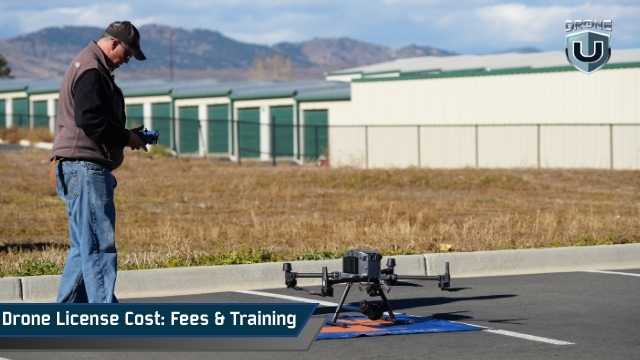
Before you can secure your drone license, there is one crucial question you need to answer: How much is this certification actually going to cost?
What Does a Drone License Cost in 2026?Obtaining an FAA Part 107 Remote Pilot Certificate requires a minimum investment of $180: the $175 exam fee plus $5 for drone registration. Most pilots budget $250–$450 when including optional study materials. Here are all the cost components at a glance:
|
The truth is, obtaining your Federal Aviation Administration (FAA) Part 107 certificate comes with only one strictly mandatory cost. Everything else is entirely optional. You have the freedom to decide how much you want to spend based on your preferred study methods, testing location, and commercial goals.
This guide breaks down the true cost of getting your drone license in 2026, highlighting mandatory fees, optional expenses, and long-term compliance costs so you can avoid paying more than necessary.
Complete Drone License Cost Breakdown (2026)
Here is a comprehensive list of every potential expense—both required and optional—that you might encounter on your journey to becoming a certified commercial drone pilot.
| COST ITEMS | DETAILS | COST RANGE | REQUIRED? |
|---|---|---|---|
| FAA Part 107 Knowledge Exam | In-person test at an FAA-approved testing center. Fee charged per attempt. | $175 | Required |
| FAA Drone Registration | Register each aircraft with the FAA before a commercial flight. Valid 3 years. | $5 per drone | Required |
| Free Study Materials | FAA Airman Knowledge Testing Supplement & free online study guides. | $0 | Optional |
| Practice Tests / Study Aids | Targeted exam simulators to identify weak areas — especially airspace & weather. | $20–$60 | Optional |
| Online Part 107 Prep Course | Structured video lessons, practice exams, and rule-change updates. | $99–$300 | Optional |
| Premium Training Program | Bundled instruction, instructor Q&A, ongoing updates, and business guidance. | $300–$500+ | Optional |
| Testing Center Travel | Fuel, parking, transit, or lodging if the nearest center requires travel. | $0–$200+ | Varies |
| Biennial Recurrent Training | FAA mandates every 24 months. Free via FAA's official online platform; paid refreshers available. | $0–$100 | Required |
| LAANC Airspace Authorization | Digital authorization to fly in controlled airspace. No FAA fee charged. | $0 | As Needed |
| Background Check (TSA Vetting) | Conducted automatically as part of the FAA application process. | $0 | Included |
| Minimum Required Cost | Exam + drone registration only (self-study with free materials) | $180 |
What Exactly Is a Drone License, and How Does It Affect Your Budget?
When discussing a "drone license," it generally refers to the FAA Part 107 Remote Pilot Certificate. This is the mandatory credential required for anyone flying a drone for purposes beyond basic recreation. If your drone flights generate income, promote a business, or assist in a job, the FAA classifies it as a commercial operation.
This includes activities like real estate photography, video production, construction mapping, agricultural surveys, and public safety support. Even a flight compensated with indirect benefits or a "free" flight for a client's marketing campaign requires a Part 107 certificate. Operating commercially without it can result in steep FAA fines and lost business opportunities, which is why smart pilots invest in certification early.
The Core Expense: The FAA Part 107 Exam
The most significant mandatory cost in your drone license journey is the FAA Part 107 exam fee. As of 2026, taking the knowledge test costs $175 per attempt. This price is standardized by the FAA and processed through approved testing centers across the country.
This fee covers a single, in-person testing session, the scoring of your exam, and the official submission of your results to the FAA. It does not include any study aids, practice tests, or training courses. Crucially, if you fail, you will have to pay another $175 for a retake. Because of this, investing in adequate preparation often saves money in the long run.
Optional Training and Study Materials
Once the exam fee is accounted for, your remaining budget is highly flexible. The FAA does not mandate any paid courses to sit for the exam. Here are the common routes pilots take:
- Free Study Options: The FAA provides complimentary study materials, including the official Airman Knowledge Testing Supplement. Disciplined learners can utilize these free resources to keep their total licensing cost at the absolute minimum.
- Practice Tests and Study Aids: Ranging from $20 to $60, these are highly recommended for pinpointing weak areas (like reading sectional charts or deciphering weather reports) before test day.
- Paid Online Courses: Typically priced between $99 and $300, these courses offer structured video lessons, comprehensive practice exams, and simplified explanations of complex airspace rules, greatly reducing the risk of a costly test retake.
- Premium Programs: Costing $300 or more, these packages usually include direct access to instructors, business coaching, and lifetime curriculum updates.
Hidden Logistics: Testing Centers and Travel Costs
A commonly overlooked expense is the logistics of taking the in-person exam. You must sit for the test at an FAA-approved facility. If you live in a rural area, reaching the nearest testing center might require significant travel.
You should factor in fuel, tolls, parking, or even an overnight stay if the center is far from home. Additionally, consider the opportunity cost of taking time off work or rearranging paid drone flights while waiting for an open test slot. Booking your exam well in advance allows you to secure the closest location and the most convenient time slot, mitigating these hidden fees.
Recurrent Training: Your Ongoing Compliance Cost
Your drone licensing costs don't completely end once you pass the initial exam. To keep your Part 107 certificate valid, the FAA requires pilots to complete recurrent training every 24 months. This is not optional.
Fortunately, this process is now highly accessible. As of 2026, recurrent training can be completed entirely online through the FAA's official safety portal for free. While some third-party organizations offer paid refresher courses (usually between $25 and $100), the mandatory compliance itself will not cost you a dime if you use the FAA's platform.
Additional Costs to Consider
Beyond training and testing, there are a few minor administrative requirements to keep in mind:
- Drone Registration Fees: Commercial drones must be registered with the FAA before flight. The fee is $5 per drone, and the registration is valid for three years.
- Background Check and TSA Vetting: There is no extra charge for this. The Transportation Security Administration (TSA) reviews your application as part of the FAA process, which is included without adding to your licensing cost.
- Airspace Authorizations (LAANC): If you plan to fly in controlled airspace, you can request LAANC authorization digitally. The FAA does not charge a fee for these requests.
Note: You do not need a state-level drone license, nor does the FAA charge an annual pilot fee. These are common myths that often make the cost of a drone license seem higher than it actually is.
Is the Part 107 Certificate Worth It?
When evaluating the cost of a drone license, it is best to view it as a business investment. A Part 107 certificate legally unlocks lucrative commercial opportunities. Operating without one limits your client base, as professional organizations, real estate agencies, and industrial firms will only hire certified pilots.
Moreover, certification protects you from massive FAA penalties that far exceed the $180 baseline cost of getting licensed. At this stage, the question isn't whether the license costs money; it is whether staying uncertified will eventually cost you more.
Conclusion
The baseline cost to become a commercial drone pilot in 2026 is strictly defined by the FAA, but your total investment ultimately depends on your personal preparation strategy. Whether you choose a lean, self-study route or invest in premium training for peace of mind, careful planning will help you budget effectively. By understanding exactly what fees are required and which are optional, you can confidently take the next step into the commercial drone industry.
Ready to elevate your drone operations? Equip yourself with the best gear, drones, and professional accessories by visiting https://globaldroner.com/ today.